
The Records Behind an Indianapolis Resident Lookup
No single Indianapolis roll proves every fact about one person. A resident lookup should begin with the record that fits the question, then move to a second custodian. A parcel card can identify the assessed owner and distinguish a mailing address from the property situs. A court index confirms a party role and filing event. A voter record concerns registration at a point in time, while a vital or historical index concerns a dated life event.
| Record | What It Confirms | Where to Search | Access |
|---|---|---|---|
| Assessor card | Assessed owner, parcel, situs, mailing and transfer fields | Marion County Assessor Property Cards | Public online card; some protected-owner limits may apply |
| Voter record | Registration status, address and precinct at an election date | Indiana Voters or Marion County election office | Status services online; public-file requests have limits |
| Court index | Party role, case number, court, filing date and status | Indiana MyCase | Nonconfidential public information; older records may be offline |
| Vital and marriage indexes | A dated birth, death, marriage or divorce lead | Indiana Legacy, MLPL, IDOH or Clerk | Indexes vary; certified copies have separate rules |
| License or entity record | Official credential or named business role | PLA verification or INBiz | Free search; an association is not proof of residence |
If the starting clue is an address, begin with the assessor and preserve both situs and mailing fields. If it is a name, add a middle initial, date range, relative, former address, or known role before searching. A common name paired only with an Indianapolis ZIP is too weak to merge records.
Search Indianapolis Court Names in MyCase
Indiana MyCase search tips document the fields that make a broad name query useful. Searchers may use a case number, citation or cross-reference; a party or business name; an attorney; court; case type; open or closed status; and filing dates. Party searches may add first and middle names and date of birth for narrowing, though a date of birth is not shown as a normal public result.
| Search route | Fields to use | What to save |
|---|---|---|
| Party | Last or business name, optional first and middle, sounds-like, trailing wildcard | Role, case number, court, filed date and status |
| Case | Case number, citation, court, type, status and date range | Docket events and public document links |
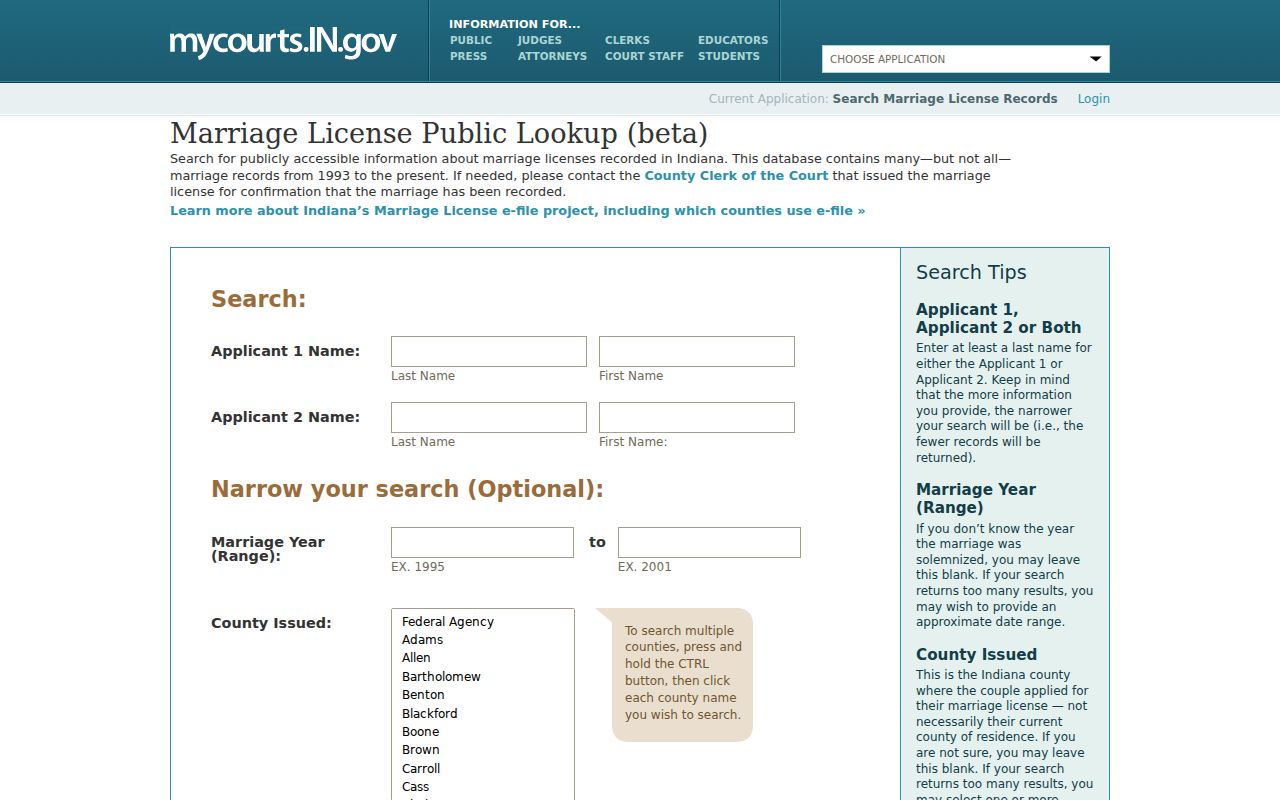
| Marriage | Both applicants' names, year range and county issued | Index details and issuing Clerk |
MyCase caps a search at 1,000 results and may show a CAPTCHA. Older cases, converted events, sealed matters, and other restricted material may be absent. The Marion County court page is the route to the Clerk for a specific offline or certified record.
The public Indiana Marriage License Public Lookup provides a separate applicant-and-year index route.
Confirming the Right Indianapolis Resident
A sound Indianapolis resident lookup labels each clue by source and date before deciding two entries concern the same person. The practical task is to anchor the name to a precise address, then confirm it with evidence created for a different purpose. Never use spelling alone when initials, suffixes, alternate forms, or common surnames could produce a false match.
- Search the assessor by owner name or address and save the parcel, situs, mailing and transfer fields without treating ownership as occupancy.
- Run MyCase party searches for the printed name, normalized name, middle initial and plausible spelling variants. Save the party role and case identifier.
- Compare a second dated source, such as a marriage index, obituary, directory entry, voter record, license, probate file or cemetery record.
- When formal proof matters, request the exact record or certified copy from the Clerk, Recorder, IDOH or other named custodian.
- Docket
- The dated list of filings, hearings, orders and other events in one court case.
- Index vs image
- An index points to a record with selected fields; an image shows the underlying page or instrument and may have different access rules.
- Certified copy
- A custodian-issued copy formally attested as a copy of its official record.
Why Indianapolis Mailing and Situs Fields Diverge
The Marion County assessor keeps both the address of the property and the address used to mail notices. Those fields can point to different cities. The research sample for parcel 9025533, for example, shows a Shelbyville mailing address and an Indianapolis situs. That is a useful same-name warning: a mailed notice does not prove where an owner lives.
Save the seven-digit parcel number and legal location with any owner-name result. Then compare the Recorder's indexed party and instrument data. This data quirk makes an Indianapolis resident lookup more accurate because it prevents a mailing contact from being recast as an Indianapolis home address.
Indianapolis Voter Status Is Not a Resident List
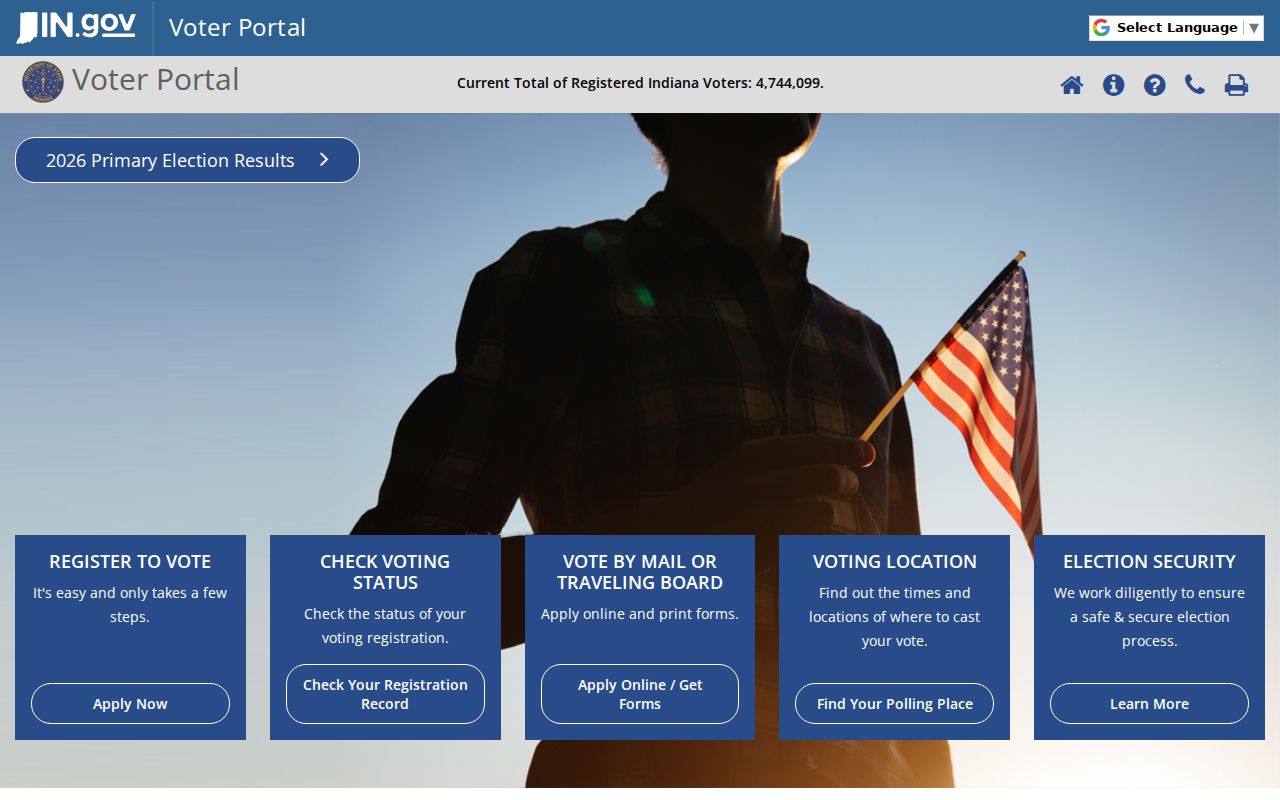
The Secretary of State voter service supports registration updates, status checks, polling-place lookup, county contacts and ballot links. It is not a casual public name-by-address roster. Marion County questions also route through the Election Service Center and the county voter-registration board.
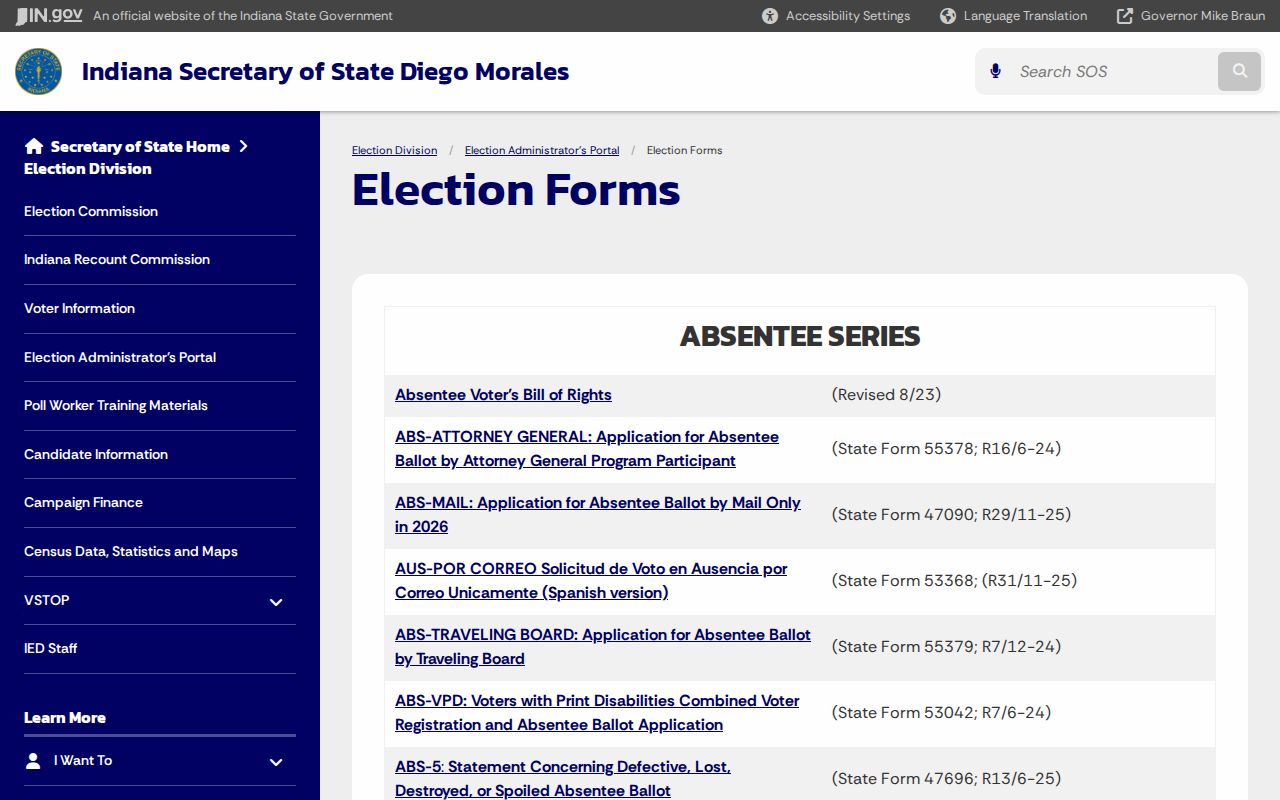
Public computerized voter data follows the VRG-24 process and current Indiana election rules. Ordinary files may contain a name, residence or mailing address, registration status and district fields, but protected and sensitive fields are excluded or redacted. Registration is a dated claim maintained for election administration, not proof that a person remains at an address now.
The Indiana Voters portal is the official status and election-service route.
The Secretary of State hosts official voter data request forms for the separate file-request process.
Indianapolis Vital Index Leads and Certified Records
A vital index can resolve a date, relationship, or place, but it is not the certificate. Indiana state birth records begin in October 1907 and death records in 1900. Named certificate access follows direct-interest rules. The current genealogy route can allow a nonfamily request for an event more than 75 years old when the person is deceased and proof requirements are met.
Index rule. Record the index name, event year, county and source before asking the proper custodian for a copy.
The Indiana Department of Health accepts state-held requests by its current mail, phone and authorized online routes; the Marion County local health office handles local questions. Marriage and divorce certified copies come from the issuing county Clerk. The Marriage License Public Lookup covers many, but not all, records from 1993 forward, and the issuing county does not itself establish residence.
Indianapolis Obituary, Probate, and School Trails
When the goal is to identify an heir, former classmate, or historical relative, start with the dated source closest to that question. Probate and will records can connect an executor, heirs and a property transfer. Indiana Legacy includes obituary, cemetery, marriage, divorce, school and newspaper indexes, including the Indianapolis Commercial Newspaper Birth/Death Index and Marion County Divorce Index for 1912 through 1935.
School material can add a name and era without proving an exact address. IU Indianapolis holds Crispus Attucks yearbooks and graduation material from 1928 through 1986, plus Thomas Carr Howe community collections. Crown Hill and FamilySearch funeral records can bridge a death or obituary clue. Review the original image or custodial record before treating a transcription as final.
Check Indianapolis License and Entity Associations
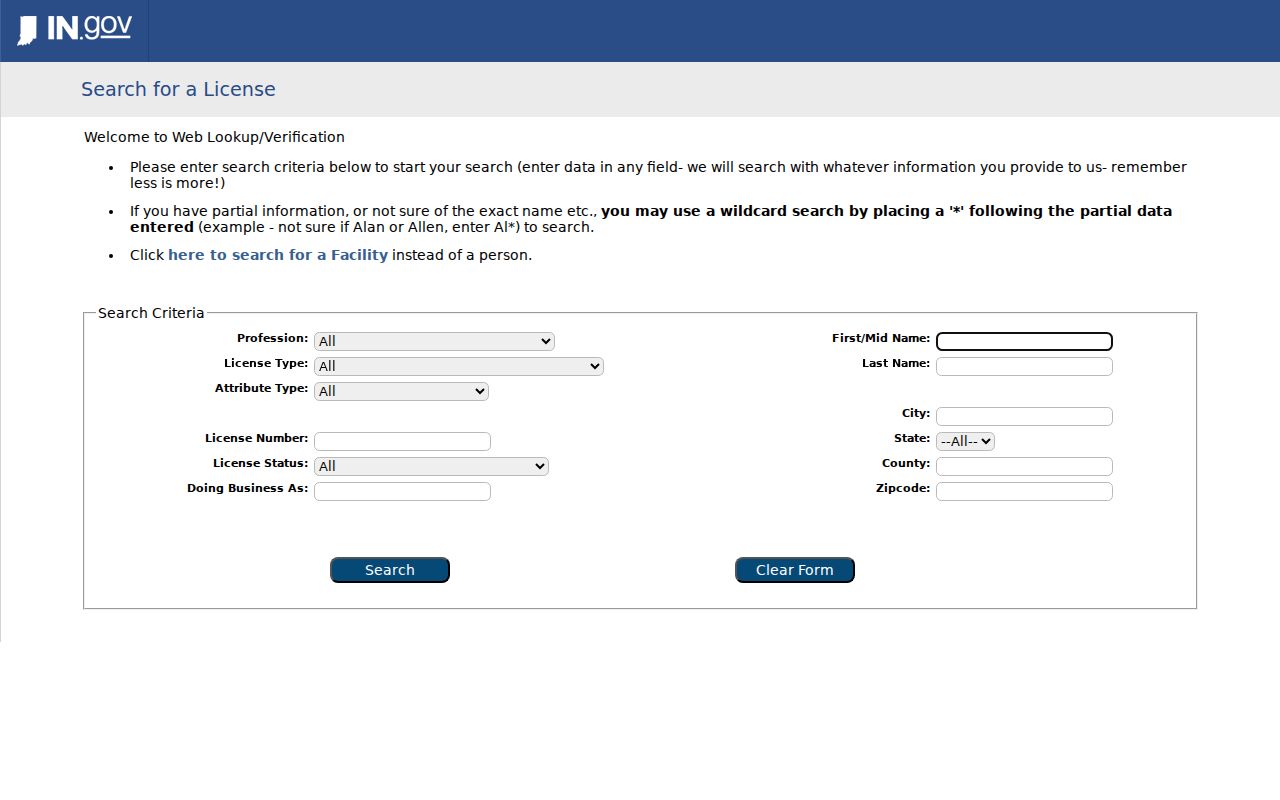
The official Professional Licensing Agency verification searches profession, name, license type or number, city, county, ZIP, status and doing-business-as fields. Its result can confirm a license category, number and status. It cannot confirm that the license city or business address is the person's current residence.
INBiz public business search accepts business names and IDs, filing numbers, registered agents, incorporators or governing persons, status, type and address fields. Keep the entity ID, role, filing date and status. A registered-agent or governing-person row explains a formal entity association, not membership in a household.
The official PLA verification page shows the fields used for credential checks.
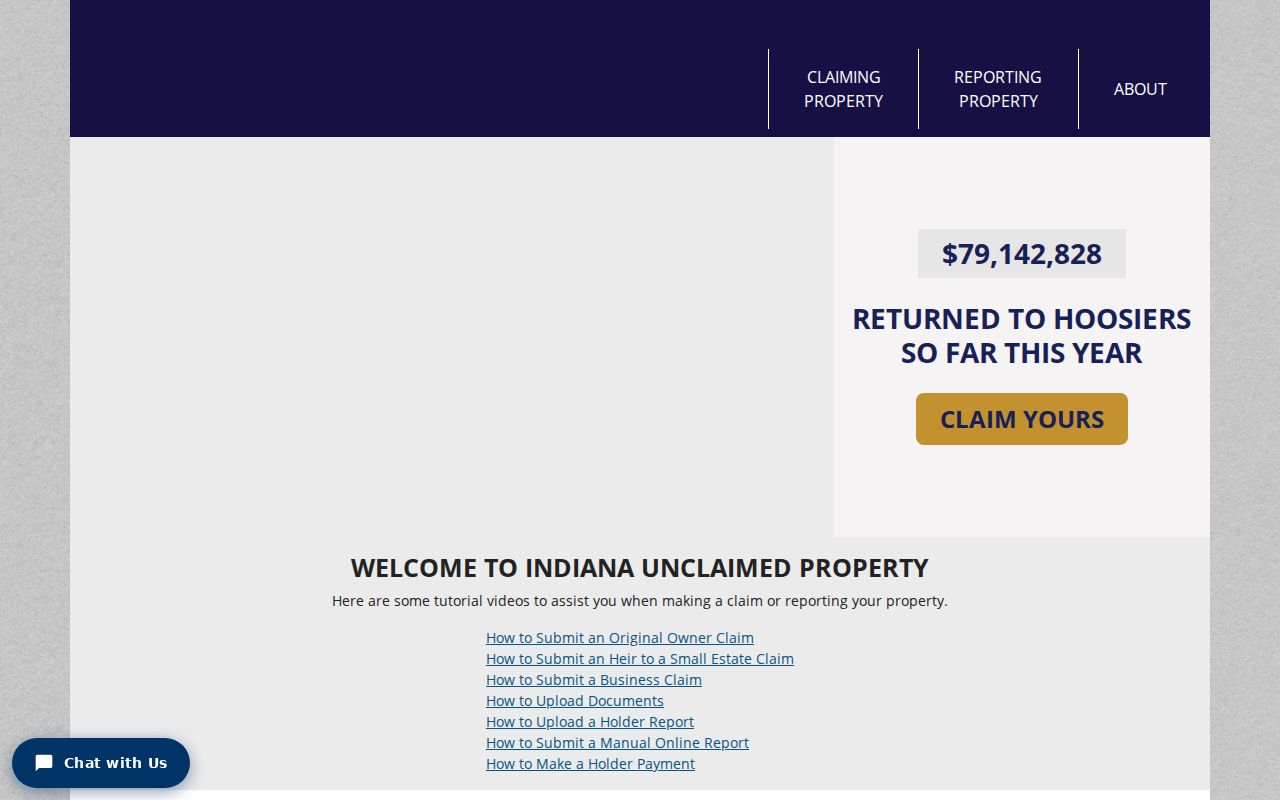
The official Indiana Unclaimed program also provides a free name, city, ZIP and property-ID search.
When an Indianapolis Record Is Not Online
First contact the office that keeps the exact record. Give a case number, parcel, instrument, date range, name as printed, and requested format when possible. The Clerk handles court and marriage records; the Recorder handles recorded instruments; IDOH or the local health office handles vital records; election officials handle voter-file procedures.
A narrow request under the Indiana Access to Public Records Act, IC 5-14-3, seeks an existing identifiable record. It does not require an agency to create a new Indianapolis resident lookup or compile all records on one person. Older or restricted MyCase material should go to the Clerk, with the understanding that confidentiality review may limit access.
Privacy Limits for an Indianapolis Resident Lookup
Indiana closes or limits adoption files, sealed and protected court matters, vital certificates without qualifying access, driver data, selected voter fields, and other sensitive records. The Address Confidentiality Program lets eligible participants use a substitute mailing address while their actual residence remains confidential. Separate property-database restrictions protect certain public officials. Never try to infer or expose a protected address.
Lawful personal use. Use a resident lookup for legitimate personal research. Never use a record to stalk, harass, intimidate, or harm a person.
For an error, contact the source custodian with the record identifier, disputed field and supporting correction. A private site's deletion process cannot erase an official record that an agency must retain. Preserve the response and keep the corrected source date with your notes.