
Indianapolis Address History Sources
No single roll lists all previous residents of an Indianapolis property. The right source depends on the date and on whether the question concerns title, occupancy, or the building itself. The current assessor card supplies the parcel, situs address, mailing address, legal description, and transfer clues. A situs address means the location of the property; it is not the same as the owner's mailing address. The recorder then provides the recorded title trail. Directories and census schedules add household evidence, including people who never held title.
| Source | Years It Covers | Where Held | What It Shows |
|---|---|---|---|
| Recorder deeds and instruments | 1821 onward | Marion County Recorder and Direct Search | Recorded parties, transfer dates, legal description, book/page or instrument |
| Indianapolis city directories | Published collection, 1855-2001 | IU Indianapolis, IndyPL, State Library | Names, addresses, occupations, and household clues, with gaps |
| Federal census schedules | Detailed schedules, 1850-1950 | Archives and library databases | Households and relationships for the census date; 1890 is a major gap |
| Baist and Sanborn maps | Varies by volume and neighborhood | Indianapolis Public Library | Lot, footprint, materials, and physical change, not occupant proof |
| Permit, obituary, and probate records | Varies by series | City portal, Clerk, libraries, archives | Work at an address and dated endpoints for named people |
For a recent address, begin with the Marion County Assessor Property Cards. For the nineteenth or early twentieth century, lead with a directory year, a map, and the closest available census. Always save the record date. Current portals, old printed volumes, microfilm, reference-desk help, phone and email requests, and a narrow Indiana Access to Public Records Act request are separate access paths.
Start With the Indianapolis Parcel
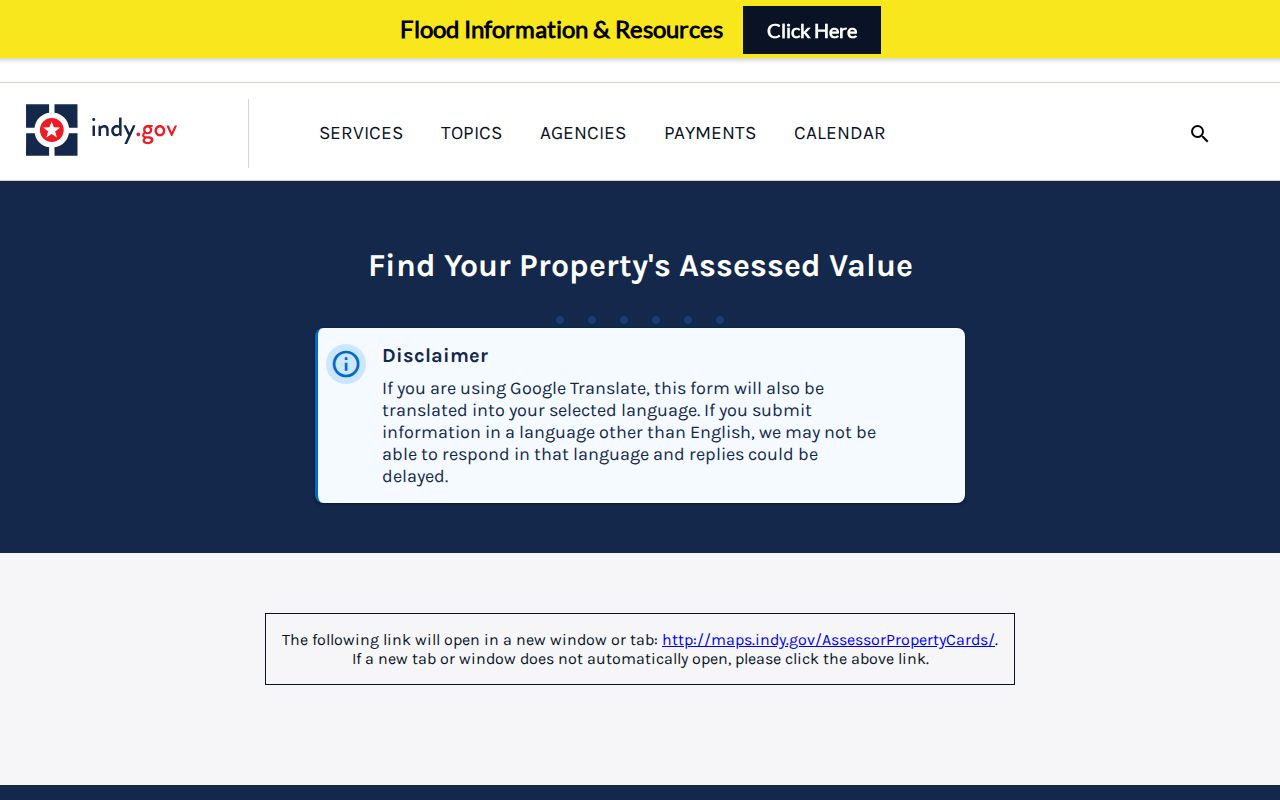
The assessor card is a practical bridge from a street address to a stable parcel identifier. Search by a seven-digit parcel number, an eighteen-digit state parcel number, all or part of an owner name, or an address suggestion. Record the situs, parcel number, legal description, transfer entry, and mailing field as separate facts. A mailing address outside Indianapolis does not show that the owner lives at the parcel, and the owner's name does not identify every person who used the home.
The official property assessment workflow shows the public starting route. Its screen is useful for finding previous residents because it provides the identifier needed for the deed index, not because it acts as a household list.
Trace Marion County Owners Backward
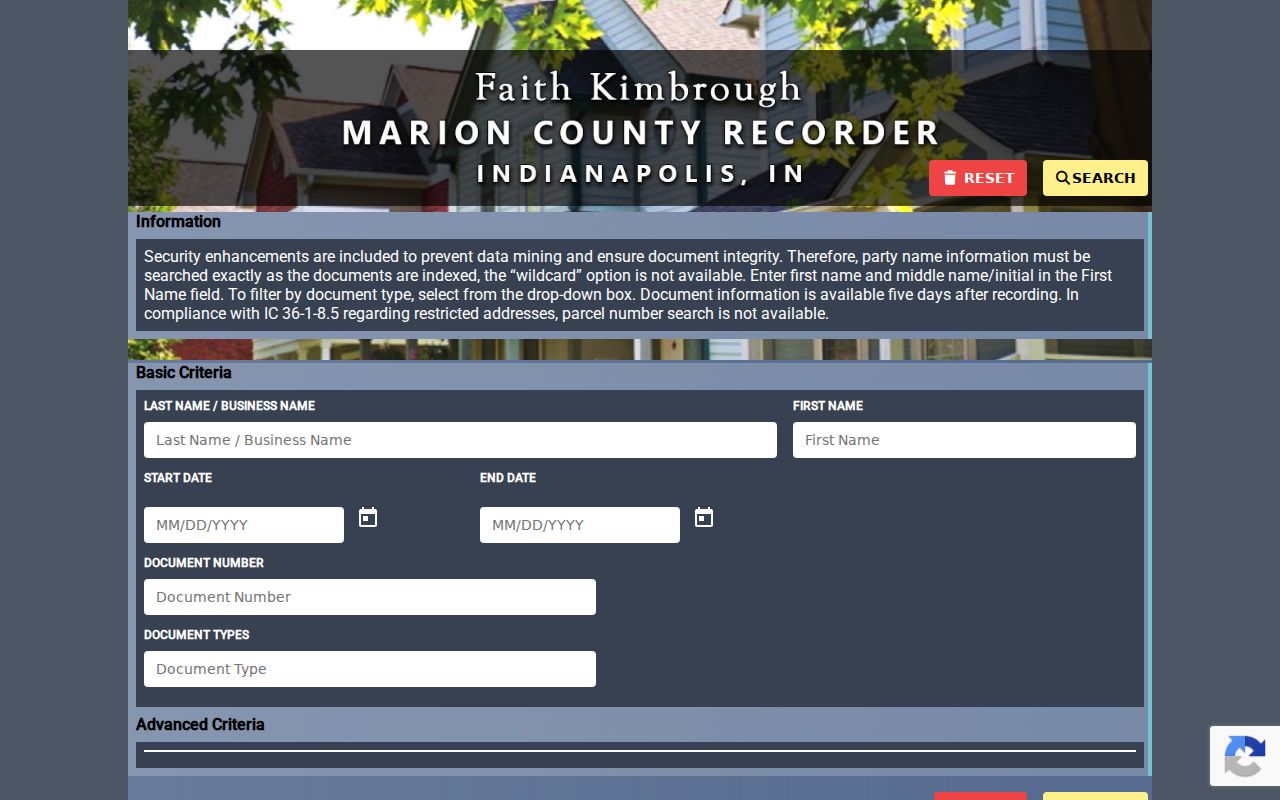
The Marion County Recorder is the title custodian, and its real-estate records begin in 1821. The Marion Direct Search accepts party name, document type, file number, book and page, town, lot and block, legal description, map, parcel, and date fields. Use the parcel and legal description to separate same-name results. Each deed is a transaction at a point in time, not proof that either recorded party occupied the house.
- Copy the current parcel number, legal description, owner, and transfer clue from the assessor card.
- Find that owner's purchase instrument and confirm the parcel or legal description on the indexed result and image.
- Take the seller's name from that deed. Search the seller as a grantee to find the earlier purchase.
- Repeat the handoff. Log each date, grantor, grantee, document type, book/page or instrument number, and any prior-deed reference.
- When the online trail thins, contact the Recorder in Room 741, call 317-327-4020, email recorder@indy.gov, or ask for the identified book and page at a public terminal.
- Grantor and grantee
- The grantor gives or transfers an interest. The grantee receives it.
- Chain of title
- The linked series of recorded transfers for the same land.
- Legal description
- The formal land description used in deeds. It can remain useful after a street name or number changes.
The recorder search screen displays the fields that make a repeatable trail possible. Review the official deed and document search before interpreting a hit.
Indianapolis Deed Formats Change
Older Marion County records require the right citation format. Documents from 1821 through 1949 use a two-letter book code followed by six-digit book and page values. The Recorder's example, DE000456-000123, explains the pattern rather than identifying an actual deed. Records from 1950 through March 31, 1964 use a leading A, a four-digit year, and an eight-digit instrument number. The guide illustrates that structure with A195100456123.
Codes also carry meaning. DE is deed, DL is deed land, DT is deed town lots, LN is liens, ML is mechanic liens, MS is miscellaneous, and MG is mortgages. More than one document may share a page and use letter suffixes. A scan can mask another item on the same page. If an index result appears incomplete, use the Recorder's office route and cite the known format, book, page, or instrument.
More than 2.5 million documents from 1821 through 1964 were part of a 2017 digitization project. Digitization improves reach, but it does not mean that each image has the same indexing detail. That distinction is crucial when a search for previous residents stops at a format boundary.
Indianapolis Addresses Changed Three Times
A clean modern street number may vanish from an old volume because Indianapolis changed addresses in 1887, 1899, and 1916. Search the years on both sides of each change. Compare the legal description, lot, cross streets, map footprint, and neighboring entries before deciding that the trail has ended. An exact-address search alone can miss the same structure under an earlier number.
The Indianapolis Public Library house-history guide gathers the local tools needed to bridge that gap, including city directories, Baist and Sanborn maps, census sources, deeds, and address-change notes.

Maps Date the Indianapolis House
Baist and Sanborn fire-insurance maps answer a different question from deeds. They can show lot lines, building footprints, construction materials, additions, and changes in use. Place a map beside the deed chain to test whether the same physical house existed during a claimed period. Do not use a building footprint as proof of a household.
The Indiana Historical Society sample for 6017 Indianola Avenue demonstrates the value of joining photographs, directories, maps, and address history. Directories trace residents there from 1918 through 1952, yet editions before 1923 did not cover Indianola Avenue in the same useful way. That absence is a coverage problem, not evidence of an empty house.
Ask IndyPL Central Special Collections, the Indiana Historical Society Reference Room, the Indiana State Library, or the State Archives for a specific map year, address, and collection. Those in-person, phone, email, and appointment channels matter when a scan is absent.
Match Indianapolis Households by Year
Owners are only one layer of an Indianapolis address history. Printed entries may name residents, spouses, widows, occupations, addresses, and sometimes phone or business ties. Street pages can serve as a reverse-directory substitute, but no separate modern criss-cross title was confirmed in the official sources. Ask library staff for street or address pages for the exact year. The broader collection details belong on the Indianapolis city directory page.
- Choose a directory year close to a deed transfer or known event. Save the year, volume, part, page, and exact printed address.
- Check the prior and next available editions. Mark a person as a directory entry, not a proven owner.
- Pair the closest released federal census schedule with the directory. The 1890 census loss leaves a major break.
- Use newspapers, Indiana Legacy obituary indexes, probate files, and cemetery records to confirm names and dated endpoints.
- Recheck the parcel and address changes whenever the street number, spelling, or household changes sharply.
Federal schedules from 1850 through 1950 form the detailed census core under the current 72-year release rule. Early directories may omit streets, use surname-only entries before 1914, or contain spelling errors. OCR is only a discovery aid. Read the page image before transcribing a name.
Lawful use. Research previous residents for house history, family history, heirs, or personal curiosity. Never use a historical trail to track, intimidate, or harass a living person.
Indianapolis Trails Beyond the Directory
When a name disappears from the address, probate, obituary, and cemetery sources can explain the next step without assuming where the person moved. Marion County's historical guides list probate and will series reaching into the nineteenth century. Indiana Legacy searches obituary, marriage, divorce, cemetery, newspaper, and school indexes by record type, date, and keyword. Crown Hill records can add burial or funeral evidence for a named person.
Label each hit by what it actually shows: recorded party, directory entry, census household member, obituary subject, probate party, or burial record. These roles should not be merged into one claim. The Marion County Clerk, State Library, Indiana Historical Society, State Archives, and cemetery office provide offline routes when indexes stop short.
Note: A no-hit in one Indianapolis source is a prompt to check its coverage and access channel, not proof that no past resident existed.